Architecture of Attunement
Architecture of Projection
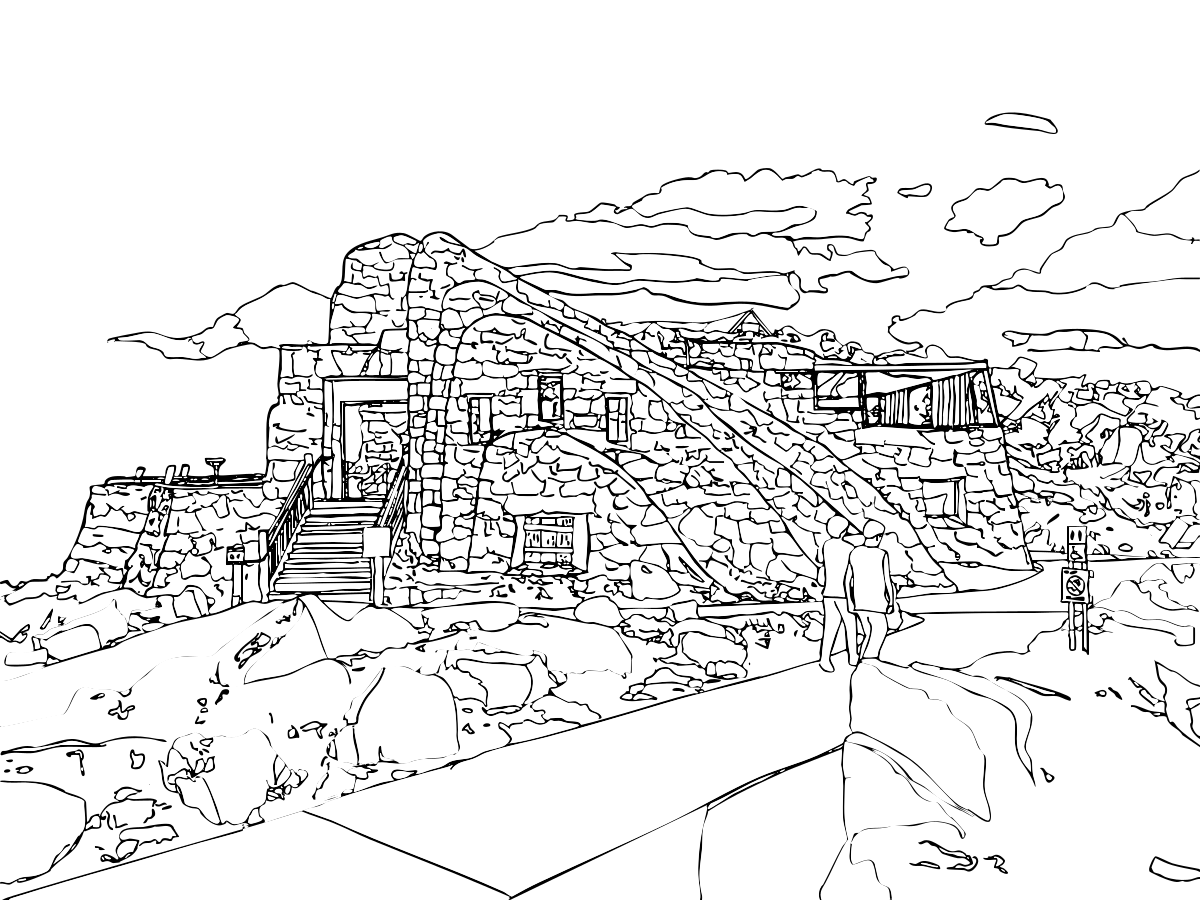
In the summers of the 90’s I worked as a construction laborer in Colorado, with two summers spent on the summit of Mt. Big Sky, 14,280 feet above the sea. We built an accessible observation deck in the ruins of a 1940s souvenir and donut shop called the Crest House that burned in 1979, and an observatory for Denver University’s radio telescope.
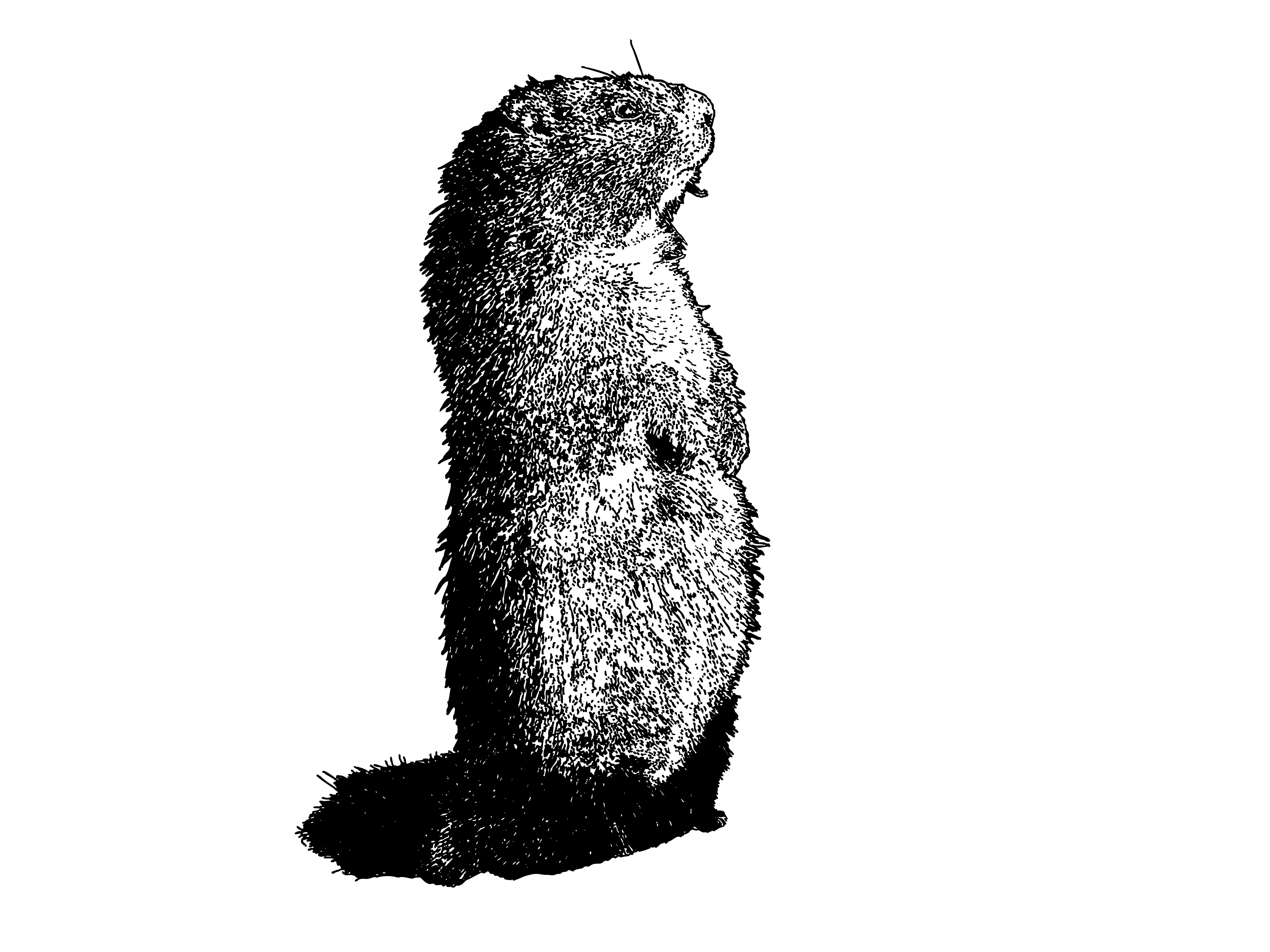
We’d drive to the summit before dawn from a campground below treeline, often catching the sunrise toward Denver rising over low clouds. There was usually a Marmot standing on a rock near the top facing the sunrise, and I called him Whitman, an assumed male marmot pondering the universe with Walt and me.
Now I think of this as a sacred practice for the marmots, maybe THE sacred practice. Sitting, plumb alignment, extension for scanning and listening, minimal contact with a cold but warming bit of rock, limbs resting in belly fur warming with the first sun, a taut line from hole to feet to head and out. That fuzzy body evolved into this nurturing practice, an architecture of attunement, and to compare that to what we do is sacrilege.
Of Life immense in passion, pulse, and power,
Cheerful, for freest action form’d under the laws divine,
The Modern Man I sing.
-Walt Whitman
Working Title: Everybody wants the Crest House
or: An Architecture of Projection
Setting: The Summit of Mount Big Sky
Date: 1940-42
Cast
Gus Roehling – Creator, poet, builder
Edwin Francis – Denver Architect working in the International Style
Thayer Tutt, Co-Owner – A big deal in high elevation tourism, and this was the highest
Quigg Newton, Co-Owner – Lawyer and future mayor of Denver
Denver – Desperate to best Colorado Springs with its Pikes Peak stuff
Flagstone – Creates a relationship with Nature
Nature – All the reasons everything was so difficult
On a beautiful summer day
I drove to my shining mountains,
My best girl beside me.
We drove over rocky, winding roads,
Through rain, mist, and fog.
As we came to the very top
The sun came out in all its glory.
Then we walked hand in hand
And came to a rocky promontory
A place for my dream castle in the sky.
-Gus Roehling, 1920s
Crest House Design Basis
Builder Gus Roehling leveraged his love poem and reputation as a local builder to secure the contract. Financing was provided by co-owners; Thayer Tutt, a tourism magnate, and Quigg Newton, a politically ambitious lawyer. Architect Edwin Francis intended a masterpiece in the Moderne style, of steel glass and concrete. The resulting building represented an epic battle of poetic metaphors, modernist ideals, economic promises, material aspirations, material realities, and a harsh, remote site. But while the pressures were often at odds, all stakeholders agreed that the Crest House should be built, and that it should be clad in stone, so that it might seamlessly blend with the surrounding landscape. And it is still doing that, what’s left.
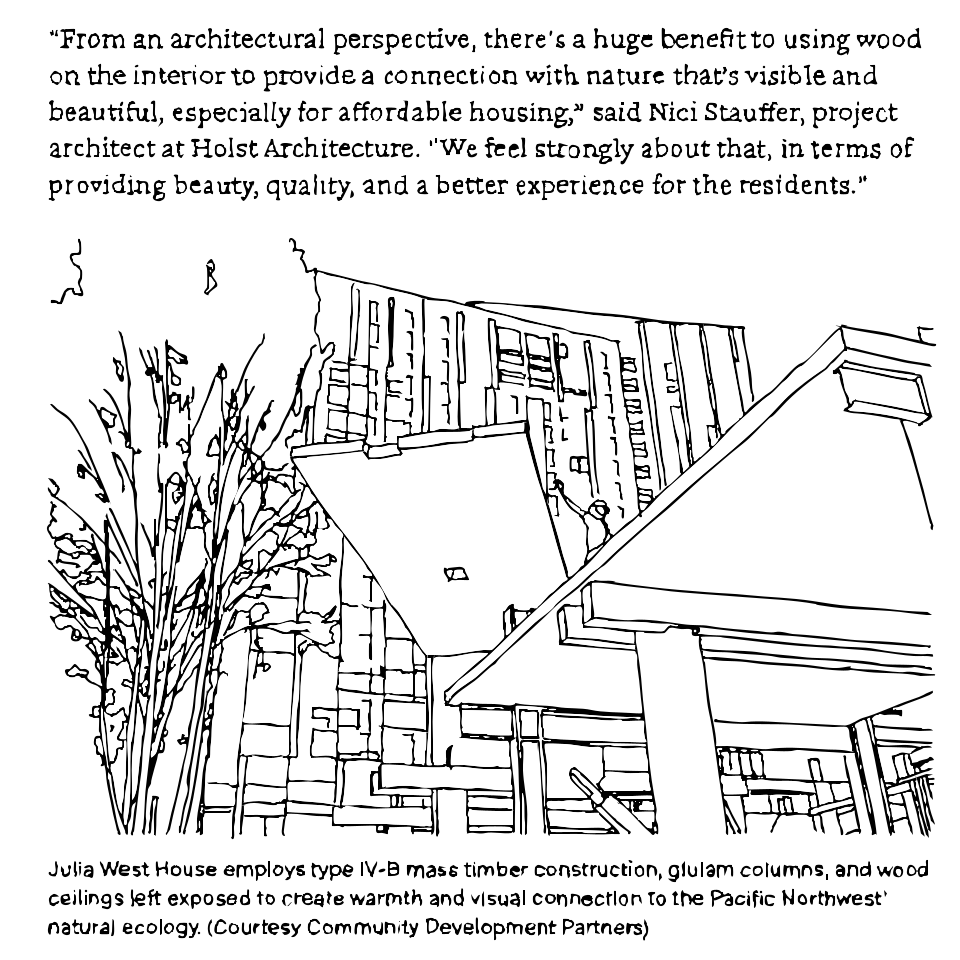
Holst Architecture, designer of the Julia West House recently featured in the Architect’s Newspaper, emphasized the biophilia of wood and the expression of communal space as two of the drivers on the project. This is a low income housing project, and it is implied that the wood ceiling will be an obvious upgrade. But the appearance of wood is not a measure of sustainability. That value starts with the benefits of replacing a structure of steel and concrete with solid bars of sequestered carbon, every building a bank that could be designed to be disassembled and reused, real material and carbon currency. Mass timber can be more sustainable and less expensive as basic structural panels with non-finish quality. A ubiquitous wood ceiling impacts code responses, lighting, mechanical and plumbing decisions, and every wall to ceiling detail. There will be a desire to get the best finish possible, and that finish will be difficult to repair. And the residents have no choices.
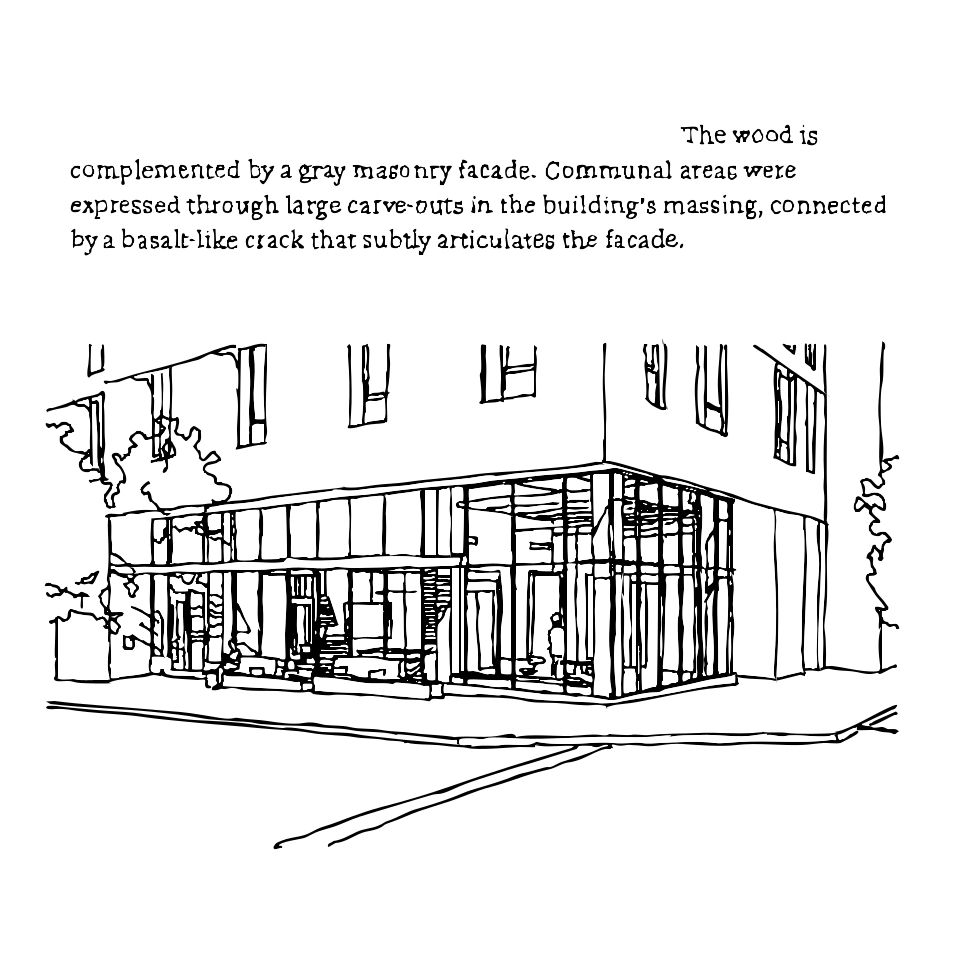
What does it mean to express a communal space on the exterior? What is a basalt-like crack? Is the whole building like a giant rock with carved out space like a Jorge Yázpik sculpture? Is this like the peacock expressing his fitness, behold my communal space? Does the expressing it support the reasons for having it? Does it expand possibilities for the users or the passive qualities of the environment? Does it afford cultural expression, or respond to the evolving needs of the community? Does it require steel? It looks like a glass lobby with furniture that you walk through to get to the elevators. Another architecture of projection.
Julia West House provides 90 fully-furnished apartments. So what can the residents have?
