Toward an Emergent Physiology
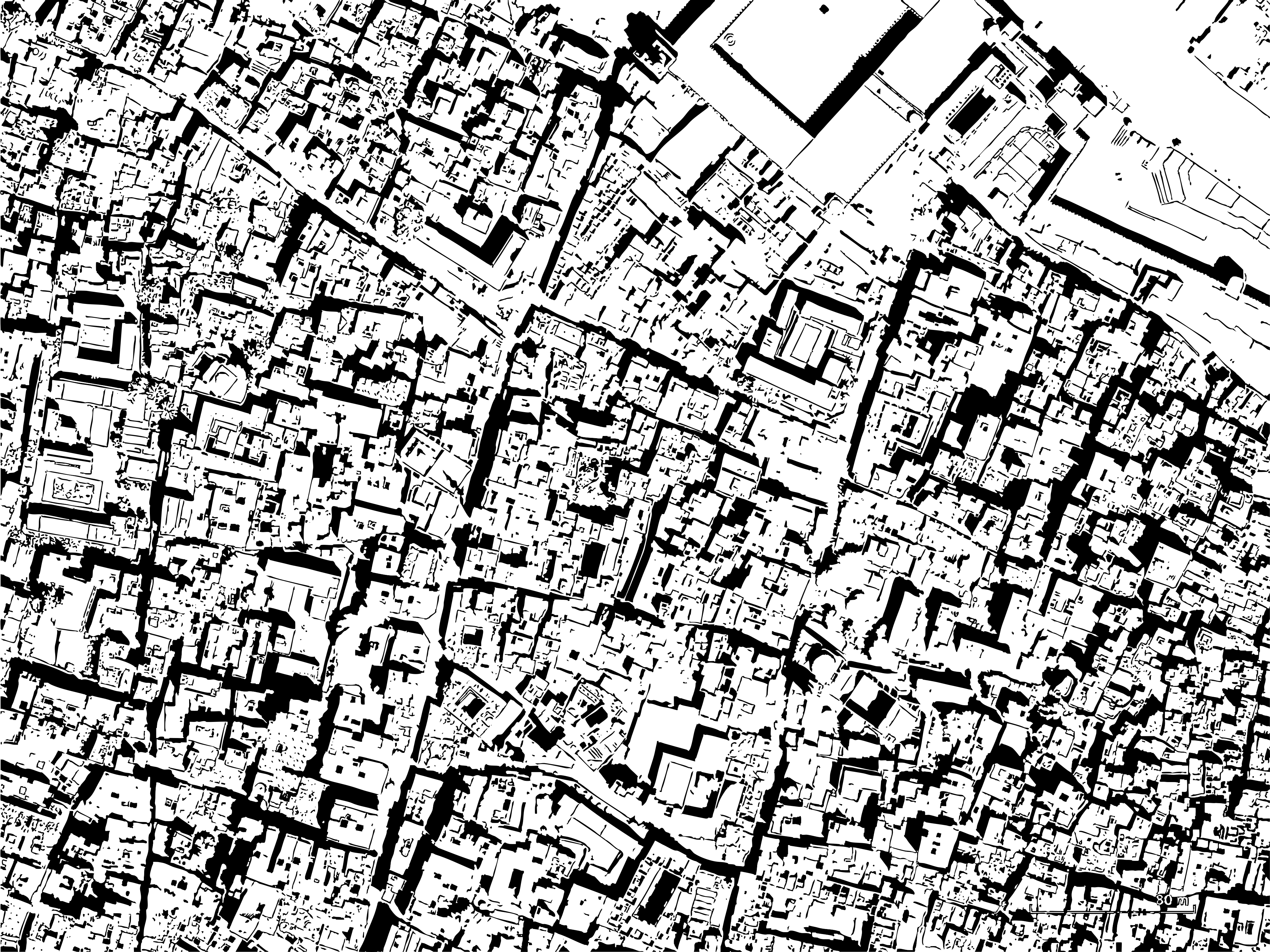
“Social insects, specifically termites, cooperate to produce “emergent physiology” at a scale much larger than the individuals in the colony… How is it that swarms of termites “know” to build a structure that functions as an organ of physiology at a scale much larger than themselves? Just how do termite mounds work in the first place? These are questions we have long thought we understood, but in fact understand little.” – Scott Turner

In the language of this theme issue, the termites and the structures they build act as a hybrid liquid/solid brain. The termites constitute the liquid component, moving freely through the mound, interacting and responding to local stimuli; the structures constitute the solid component, presenting a fixed record of activity that is modified over longer time scales. Together they form a system of distributed cognition. – Daniel Calovi, Paul Bardunias, and others “surface curvature guides early construction activation…”
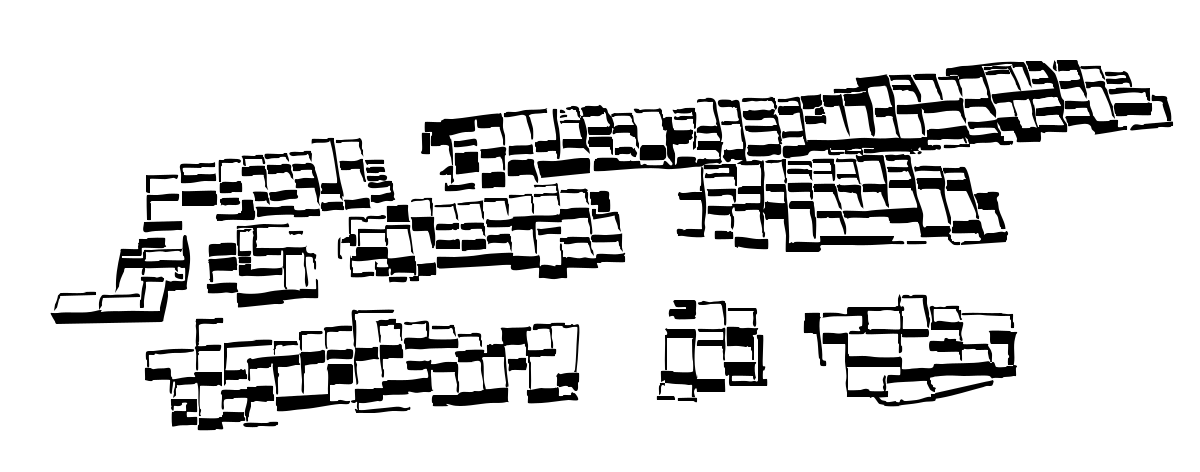
“Cities happen to be problems in organized complexity . . . They present ‘situations in which a half-dozen or even several dozen quantities are all varying simultaneously and in subtly interconnected ways.’ Cities, again like the life sciences, do not exhibit one problem in organized complexity, which if understood explains all. They can be analyzed into many such problems or segments which, as in the case of the life sciences, are also related with one another.”
— The Death and Life of Great American Cities, chapter “The Kind of Problem a City Is.”