The Peacock and the Appropriate Technology
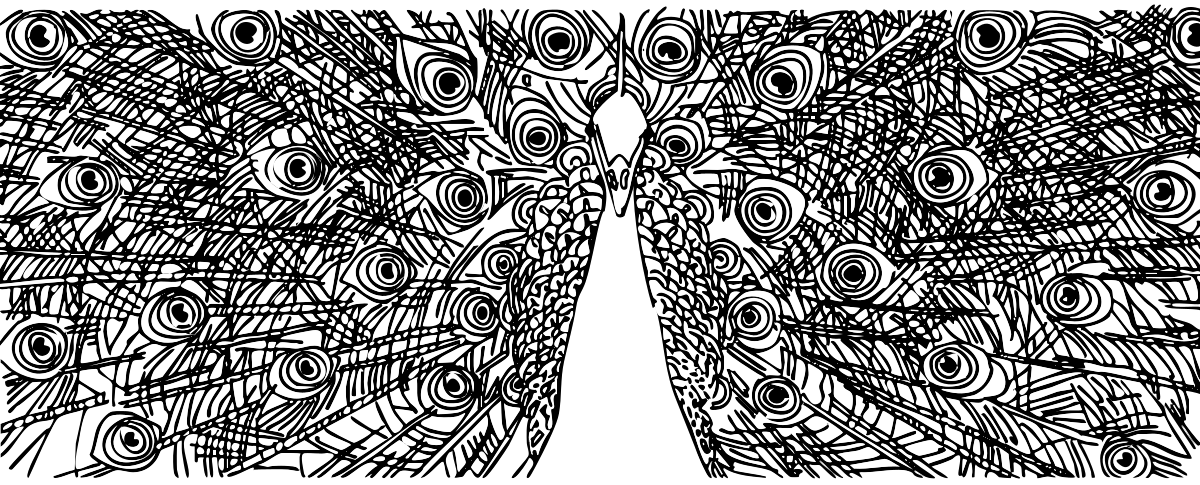
The peahen does the selection for peafowl. For herself, she selects a cryptic coloration to stand in. But for him, she selects iridescent plumage and a dance, and so many shimmering eyes, that he might convince her that he’s the one.
How did it all start? Were early peafowl so bad at finding each other that the entire technology budget was diverted into attention-getting?
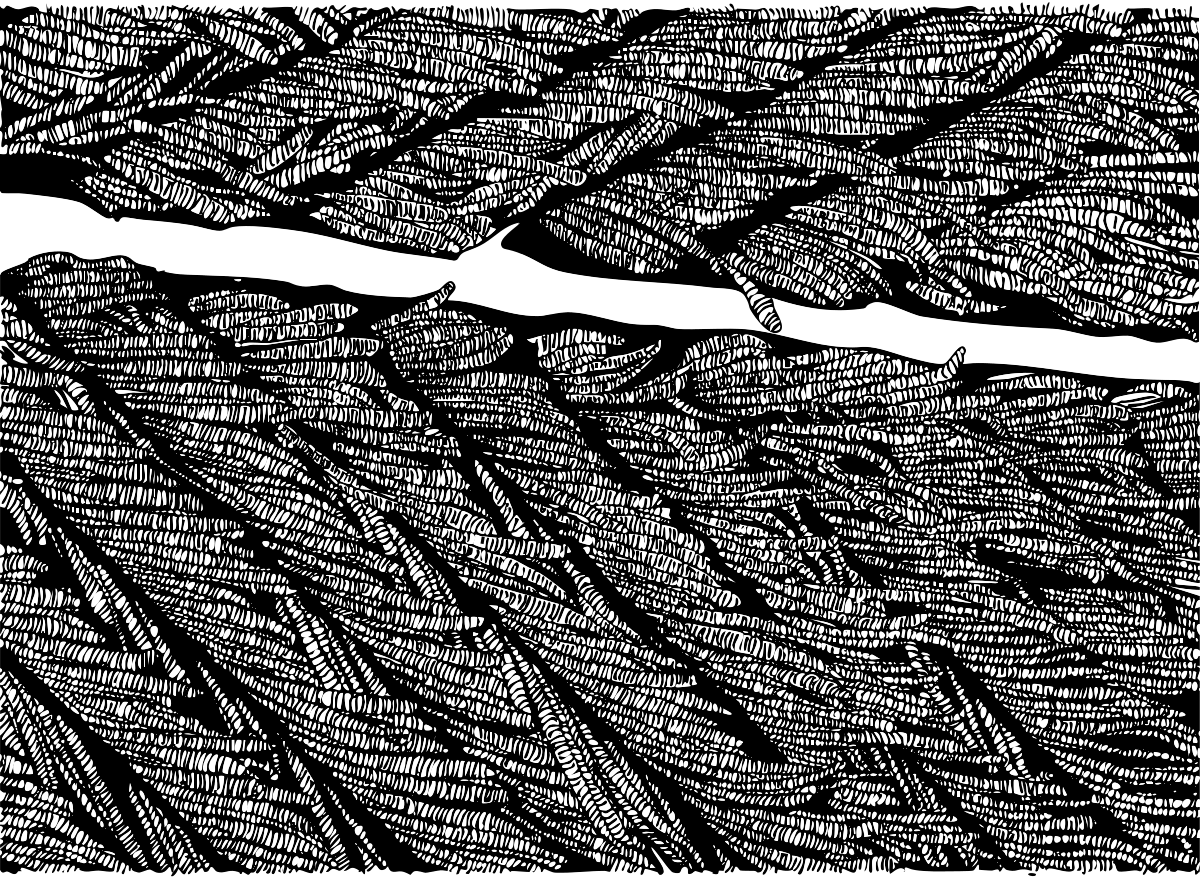
Perhaps none of the technologies utilized in the peacock were “novel”, but the peahen’s clarity of intent, expressed along a feedback loop from her evolving desire to the evolving nanostructure of his tail covert feathers, allowed her to create a miraculous living work of art. Built on a system of neutral pigments, his resplendent hues are structural prisms of light filtered through layered crystalline barbs, tricks of light.
The peacock wonders if this has gotten out of hand, but he lugs it around, and he shakes it.
The Story of Solar
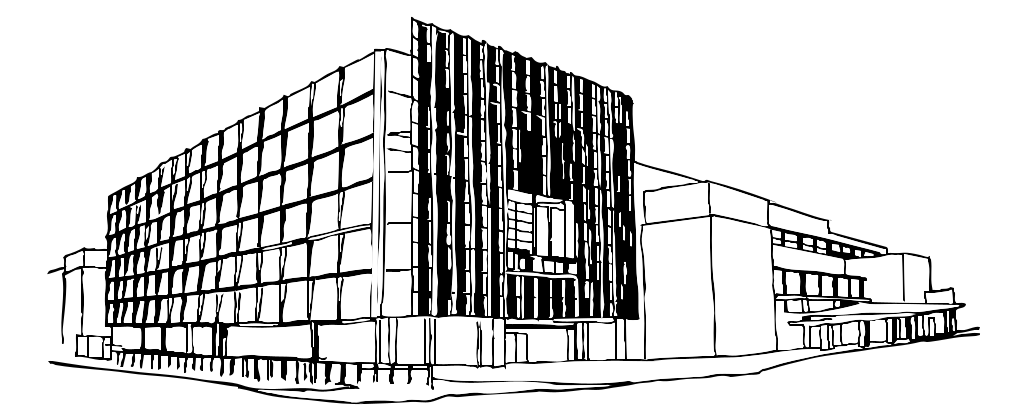
The previous demolished Austin Convention Center exhibited a complicated solar array on it’s west wall over the entry, paid for using a $1,000,000 gift from Austin Energy toward solar on the building. Although it wasn’t successful at making electricity, it was wildly successful at getting the project published, eventually leading to the architect, Page, being selected to work on the design team for a new convention center on the site.
As in the case of the peacock, a preexisting technology was diverted for the benefit of reproductive success.
Architect Larry Speck explained,
“The story of solar was more important than the function in this case. No one can see solar panels on the roof.”
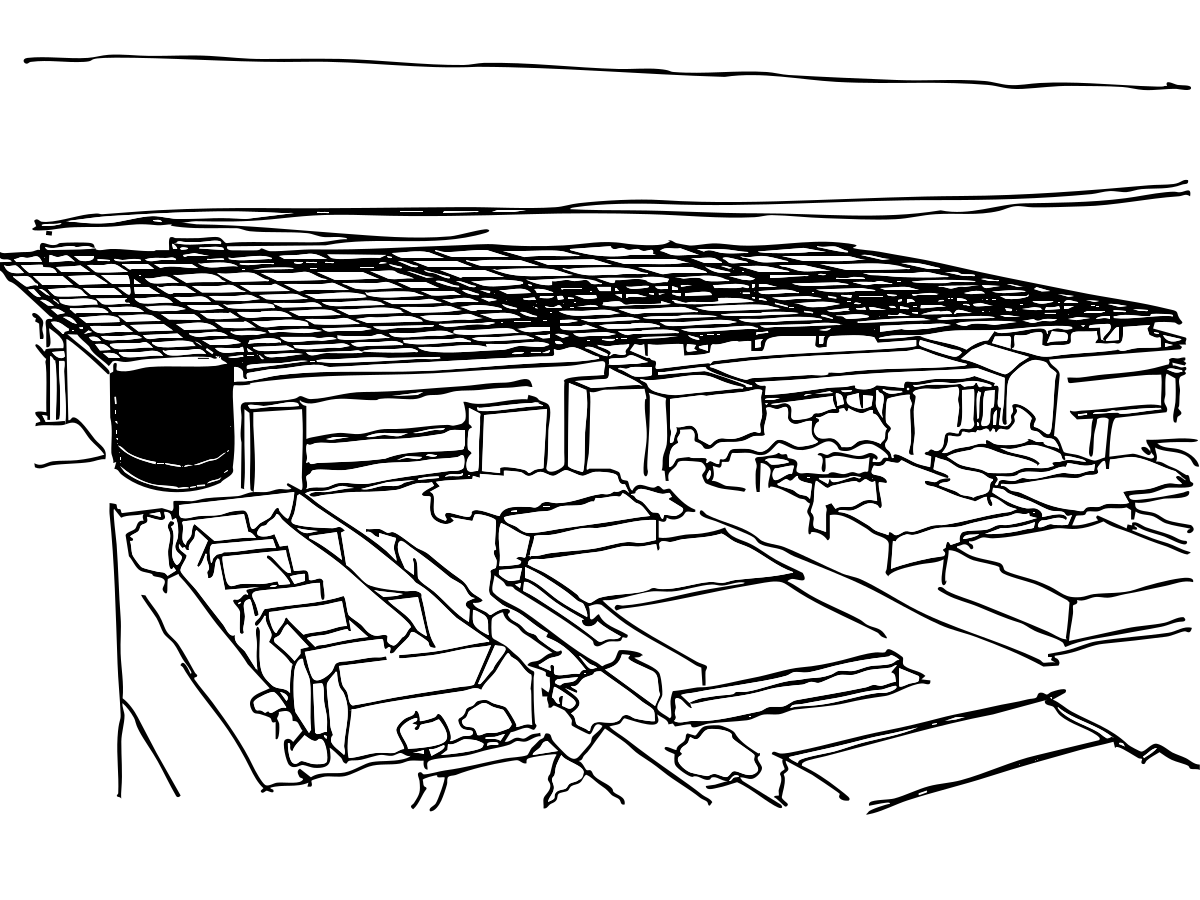
A solar array utilizing the whole roof could have produced upwards of 9 GWh/year for the last 22 years, close to the yearly electricity use reported in LEED certification documentation. But instead, the people have paid for green energy from Austin Energy and bought carbon offsets so that the convention center could claim carbon neutrality.
Now the Austin Convention Center is gone, to be replaced with a new one. Where will the story of solar go from here?
Perhaps insulated sand batteries will passively collect and store solar energy, providing hydronic heating for the convention center and surrounding buildings, and turning excess heat into electricity. And a photovoltaic system might supplement with power to the grid, turning expenses into revenue sources while directly decreasing carbon emissions.
Guerrilla Math on the Austin Convention Center
Since 2007, The Austin Convention Center claims to have reduced the carbon footprint of the convention center by 93%. Since that is literally impossible, the only way to get there is by buying carbon offsets. I calculated the total carbon footprint of the building over the course of it’s life to be 163,000 tCO₂e. So, to offset the carbon footprint of 93% of the convention center, they would need to do something like plant and nurture a half a million oak trees for 22 years. And it’s getting harder to grow those, so maybe another quarter million for good measure. Or maybe they could just pay someone $50,000,000 to do it.
Electricity per year (According to LEED documentation): 9,900,000 kWh
Total guesses, these aren’t the actual costs, but it would be interesting to know:
Standard electricity cost: $0.07/kWh
GreenChoice premium cost: $0.0075/kWh
Annual average
• Standard electricity: ≈ $693,000/yr
• Green premium: ≈ $74,000/yr
• Total: ≈ $767,000/yr
Standard electricity cost: 9,900,000 kWh × $0.07/kWh × 22 years ≈ $15.2 M
GreenChoice premium cost for 22 years: 9,900,00 kWh x $0.0075/kWh x 22 years = $1.63 M
Total cost (standard + green premium): $15.2 M + $1.63 M ≈ $16.83 M over 22 years
If the convention center had included solar on 80% of the roof area, they could have potentially powered the entire building most of the time, and lowered the total lifetime carbon footprint to 50,000 tCO₂e , a roughly 69% actual reduction in the actual carbon footprint of the building. But the system might have cost $60-90 M. So it definitely wouldn’t have paid for itself, and that $1,000,000 gift would have been a drop in the bucket.
Today an array can be built at a fraction of that cost.